

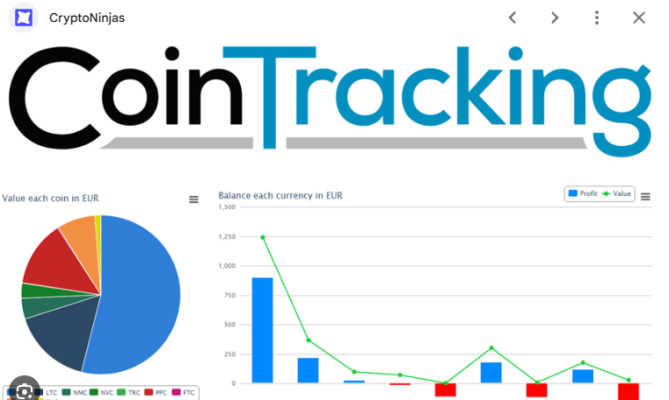
Overall Rating: 9.0 / 10 ⭐⭐⭐⭐
My Portfolio Was Fine Until It Wasn’t
For the first few months of investing in crypto, I thought a spreadsheet was all I needed.
Buy Bitcoin.
Track the purchase price.
Maybe record a few Ethereum transactions.
Simple.
Then crypto happened.
I started using multiple exchanges.
I moved assets between wallets.
I experimented with staking.
I bought a few altcoins.
Then came DeFi.
Then came token swaps.
Then came the realization that my spreadsheet had become an absolute disaster.
What started as twenty transactions turned into hundreds.
Then thousands.
At that point, I wasn’t tracking my portfolio anymore.
I was maintaining a full-time bookkeeping project.
That’s when CoinTracking started making sense.
Not because it promised better charts.
Not because it promised tax reports.
But because I finally realized that manually tracking crypto becomes unsustainable surprisingly fast.
CoinTracking Isn’t Really a Tax Tool
This is where many reviews get it wrong.
People describe CoinTracking as crypto tax software.
Technically that’s true.
But after using the platform, I think that’s actually underselling what it does.
The real value isn’t the tax report you generate once a year.
The real value is understanding what your crypto portfolio is actually doing every day.
Most investors don’t know:
- Their true cost basis
- Their best-performing assets
- Their worst-performing trades
- Their actual realized gains
- How much they’ve earned from staking
CoinTracking exposes all of that.
The tax reports are almost a side effect.
The First Thing That Surprised Me
How Much Crypto I Had Forgotten About
This sounds ridiculous until it happens to you.
After connecting multiple exchanges and wallets, CoinTracking surfaced transactions I hadn’t looked at in years.
Old Binance trades.
Tiny altcoin purchases.
Wallet transfers I completely forgot existed.
Dust balances spread across multiple platforms.
The platform essentially rebuilt my crypto history.
That was the moment I understood why serious investors use dedicated tracking software.
Without a centralized system, crypto becomes fragmented very quickly.
Where CoinTracking Actually Earns Its Subscription Fee
Cost Basis Tracking
Most crypto investors think they know their profits.
Many don’t.
There’s a massive difference between:
“I bought Bitcoin at $20,000.”
and
“My actual average acquisition cost across 47 purchases is $26,318.”
CoinTracking calculates this automatically.
That matters because investment decisions become far more rational when you know your real numbers.
Seeing the Portfolio as a Whole
One problem with using multiple exchanges is losing perspective.
Your Coinbase account says one thing.
Your Binance account says another.
Your hardware wallet says something else.
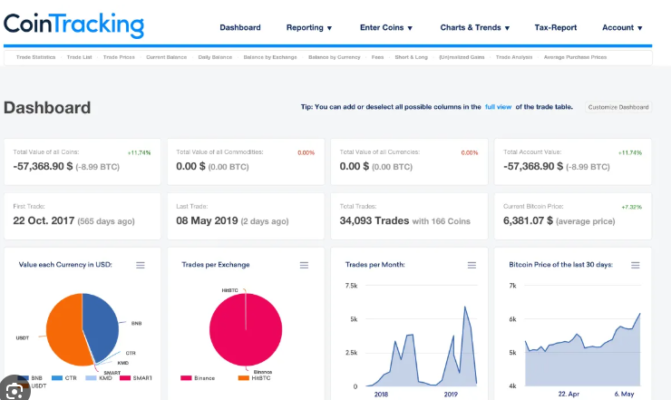
CoinTracking combines everything into a single dashboard.
For the first time, I could answer questions like:
- What’s my total exposure to Ethereum?
- How much stablecoin am I holding?
- Which assets drive most of my gains?
That sounds basic.
It’s surprisingly difficult without dedicated software.
Tax Season Stops Being Scary
This might be CoinTracking’s biggest psychological benefit.
Crypto taxes create anxiety because most investors don’t know where to start.
Before using portfolio tracking software, tax season felt like preparing for an audit.
After importing transactions throughout the year, the process becomes significantly less stressful.
The reports aren’t magic.
You still need to review them.
But you’re no longer starting from zero.
What CoinTracking Does Better Than Most Competitors
The biggest difference is depth.
Platforms like Koinly and CoinLedger often focus on simplicity.
CoinTracking focuses on information.
Sometimes almost too much information.
The dashboard contains:
- Performance metrics
- Tax reports
- Asset analysis
- Trading statistics
- Historical snapshots
- Portfolio allocation data
For serious investors, that’s fantastic.
For beginners, it can feel overwhelming.
That’s the trade-off.
The Biggest Problem Nobody Mentions
CoinTracking Feels Like Software Built by Accountants
I don’t mean that as an insult.
I mean it literally.
Everything about the platform prioritizes functionality.
Very little prioritizes beauty.
Compared with newer competitors, CoinTracking feels:
- Dense
- Technical
- Data-heavy
- Occasionally intimidating
The platform works extremely well.
It just doesn’t always feel modern.
Some users will appreciate that.
Others will immediately prefer cleaner alternatives.
Real-World Performance After Months of Use
The biggest thing I noticed wasn’t tax reporting.
It was behavioral change.
I started making better investment decisions.
Why?
Because I could actually see the consequences of previous decisions.
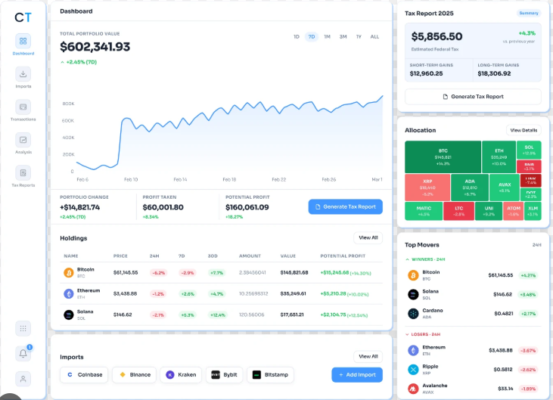
The analytics exposed patterns.
Bad entries.
Poor exits.
Overexposure to specific sectors.
Unnecessary risk concentration.
In that sense, CoinTracking became less of a reporting tool and more of an accountability tool.
And that’s where long-term value comes from.

Pricing Analysis
Here’s the reality.
If you make:
- 10 crypto transactions per year
you probably don’t need CoinTracking.
A spreadsheet will work.
If you make:
- Hundreds of trades
- Staking transactions
- DeFi interactions
- Multi-wallet transfers
the software becomes much easier to justify.
The cost isn’t really about generating reports.
It’s about reclaiming time.
Many investors spend hours trying to reconstruct transaction histories.
CoinTracking essentially automates that process.
Honest Limitations
1. Beginners May Feel Overwhelmed
The platform throws a lot of information at you immediately.
This isn’t beginner-friendly software.
It’s professional-grade software.
There’s a difference.
Dealbreaker?
Potentially.
2. Some Manual Cleanup Is Still Required
No crypto tax platform achieves perfect automation.
Complex transactions occasionally require manual review.
CoinTracking is no exception.
Dealbreaker?
No.
But expectations should be realistic.
3. The Interface Feels Old
This remains one of the most common criticisms.
The functionality is excellent.
The design feels dated.
Dealbreaker?
Depends how much you value user experience.
4. Casual Investors May Never Use Most Features
Many subscribers only use:
- Portfolio tracking
- Tax reports
and ignore everything else.
That’s like buying a Swiss Army knife to open packages.
You’re paying for capabilities you may never use.
CoinTracking vs Other Crypto Tax Platforms
Choose CoinTracking If:
- You actively trade crypto.
- You use multiple exchanges.
- You participate in DeFi.
- You want detailed analytics.
- You enjoy data.
Choose Koinly If:
- Simplicity matters more.
- You want a cleaner interface.
- You have a smaller portfolio.
Choose CoinLedger If:
- Tax reporting is your only goal.
- You don’t care about advanced analytics.
Who Should Buy CoinTracking?
Ideal Users
- Active traders
- DeFi investors
- Long-term crypto holders
- Crypto accountants
- Multi-wallet investors
- Data-driven investors
Wrong Users
- Complete beginners
- Casual investors
- Buy-and-hold Bitcoin-only users
- People who hate learning software
Final Verdict
The biggest mistake people make when evaluating CoinTracking is viewing it purely as tax software.
That’s not what makes it valuable.
Its value comes from visibility.
Crypto becomes increasingly difficult to manage as portfolios grow.
Spreadsheets eventually break.
Memory becomes unreliable.
Exchange histories become fragmented.
CoinTracking solves those problems exceptionally well.
If you only need a tax report once a year, there are simpler alternatives.
If you want to truly understand your crypto portfolio, CoinTracking remains one of the strongest platforms available.
Detailed Scorecard
| Category | Score | Honest Assessment |
|---|---|---|
| Portfolio Tracking | 9.5/10 | Best-in-class visibility |
| Tax Reporting | 9.1/10 | Comprehensive and reliable |
| Analytics | 9.4/10 | Outstanding depth |
| Ease of Use | 7.2/10 | Learning curve required |
| User Interface | 7.0/10 | Functional but dated |
| Exchange Support | 9.4/10 | Extensive coverage |
| DeFi Compatibility | 8.8/10 | Strong but not perfect |
| Value for Active Traders | 9.3/10 | Easy to justify |
| Value for Beginners | 7.4/10 | Often unnecessary |
| Overall Rating | 🌟 9.0 / 10 | Built for serious crypto investors |
Disclaimer
This review is based on personal evaluation, public information, and user experiences available as of 2026. Cryptocurrency tax obligations vary by jurisdiction, and users should consult qualified tax professionals regarding compliance requirements.